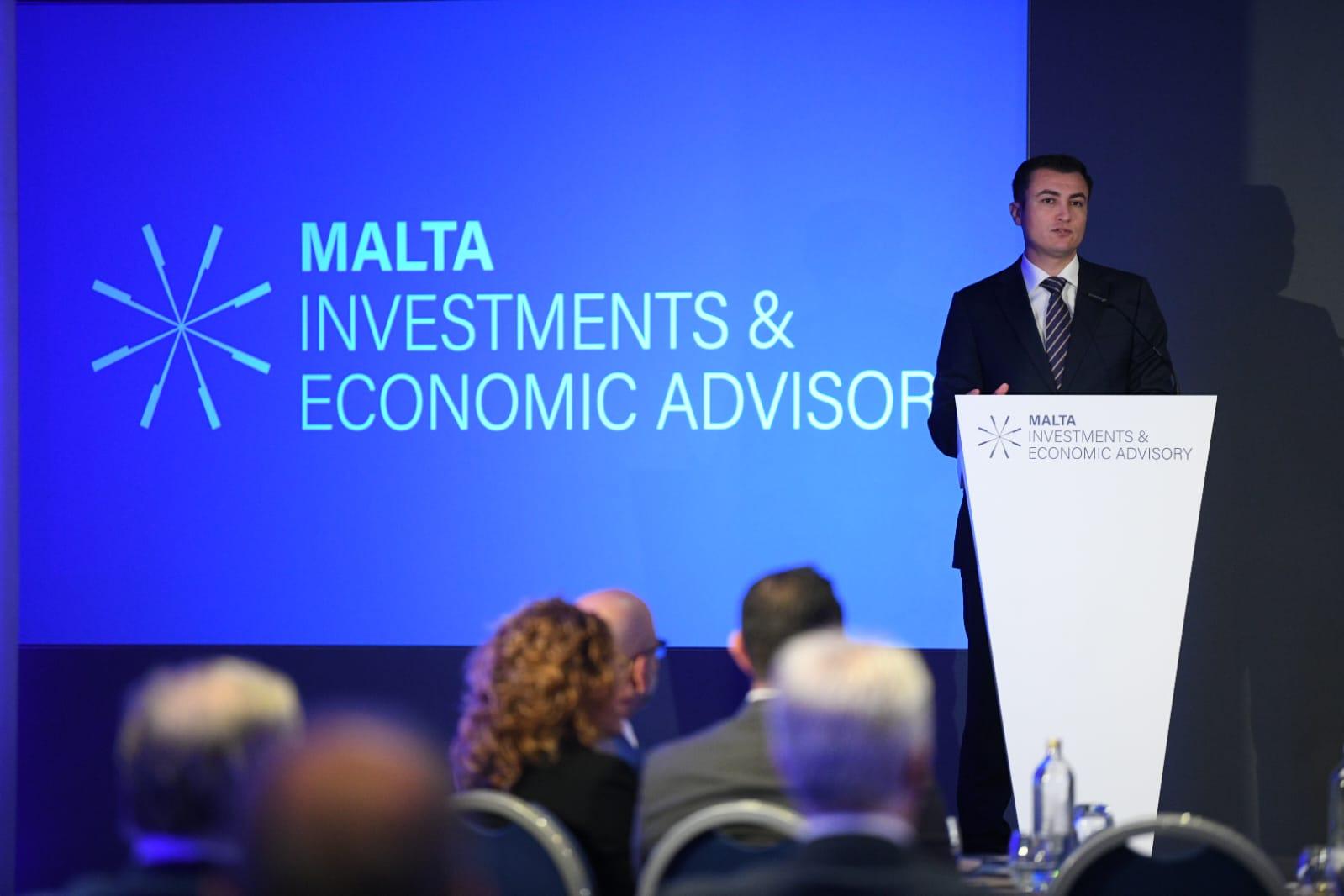
The launch of the Malta Investments and Economic Advisory (MIEA) earlier this week marked a significant step on how Malta intends to approach strategic investments and public-private partnerships (PPPs). By consolidating the roles previously carried out by Malta Government Investments, Malta Strategic Partnership Projects, and MIMCOL, the Government is moving towards a more coordinated and focused institutional framework.
This merger is one of a string of moves being conducted by the government to bring about more efficiency and remove fragmentation of entities. It also reflects the commitment of Economy Minister Silvio Schembri, whose efforts to simplify operations and remove bureaucratic hurdles has been central to this merger. His work has helped set the foundation for a stronger, more coordinated framework that can better support Malta’s long-term economic vision.
This restructuring sends a clear signal about Malta’s economic direction. Strategic investment, restructuring, and public-private collaboration require alignment, clarity of purpose, and long-term vision. In this respect, MIEA has the potential to act as a central strategic mind, supporting government policy and helping to drive complex projects that are aligned with the country’s long-term objectives, including those outlined under Vision 2050.
However, while organisational reform is important, the true test of success will lie not in structure, but in delivery.
From a contracts and procurement perspective, one of the most critical and often underestimated stages of any project occurs well before a tender is issued. Successful outcomes depend on having adequate time to properly define the project, prepare a clear brief and develop a thorough understanding of the intended final result. Too often, tenders are prepared under pressure, with insufficient clarity on objectives, risk allocation, and deliverables. The result is ambiguity at contract stage and avoidable difficulties during implementation.
Proper preparation is not an administrative formality; it is a fundamental requirement for achieving value for money and reducing disputes, delays, and cost overruns.
Equally important is the way public-private partnerships are structured within the existing Public Procurement Regulations (PPR). While these regulations are essential to ensure transparency and accountability, their application to complex and long-term strategic partnerships can be overly rigid. If Malta is serious about attracting capable and experienced private sector partners, there is a strong case for reviewing how such projects are procured, with a view to adopting a more practical and commercially realistic approach.
A restructuring or refinement of how the PPR is applied in these cases would not weaken governance. On the contrary, it could improve outcomes by encouraging genuine competition, innovation, and long-term engagement from private entities that might otherwise be deterred by procedural complexity and uncertainty.
Perhaps the most significant challenge, however, lies beyond the tendering process itself. In many public projects, the award of the contract is treated as the end goal, rather than the beginning of the most critical phase. Contracts are not self-executing documents. Without active contract management, monitoring, and enforcement, even well-prepared tenders risk failing to deliver what was originally envisaged.
Effective oversight during the implementation phase is essential to ensure that what has been agreed contractually is actually delivered in practice, in terms of scope, quality, time, and cost. This requires clear accountability, regular performance monitoring, and the willingness to intervene where delivery starts to deviate from contractual commitments.
All projects can be delivered successfully when equal importance is given to preparation, procurement, and implementation. The creation of MIEA offers an opportunity not only to improve strategic planning but also to strengthen how Malta manages projects throughout their full lifecycle. If this opportunity is fully embraced, the new entity could play a key role in raising standards of delivery, accountability, and value across Malta’s most significant investments.
Strategy sets the direction, but it is execution that ultimately determines success.